Emily Malen Interview: Childhood Memories of the Theatre Royal & Developing Relaxed Performances
Title
Emily Malen Interview: Childhood Memories of the Theatre Royal & Developing Relaxed Performances
Date
17 January 2019
Description
Oral history interview with Emily Malen, Front of House Manager and Access Development for the Theatre Royal since 2005.
What's the story?
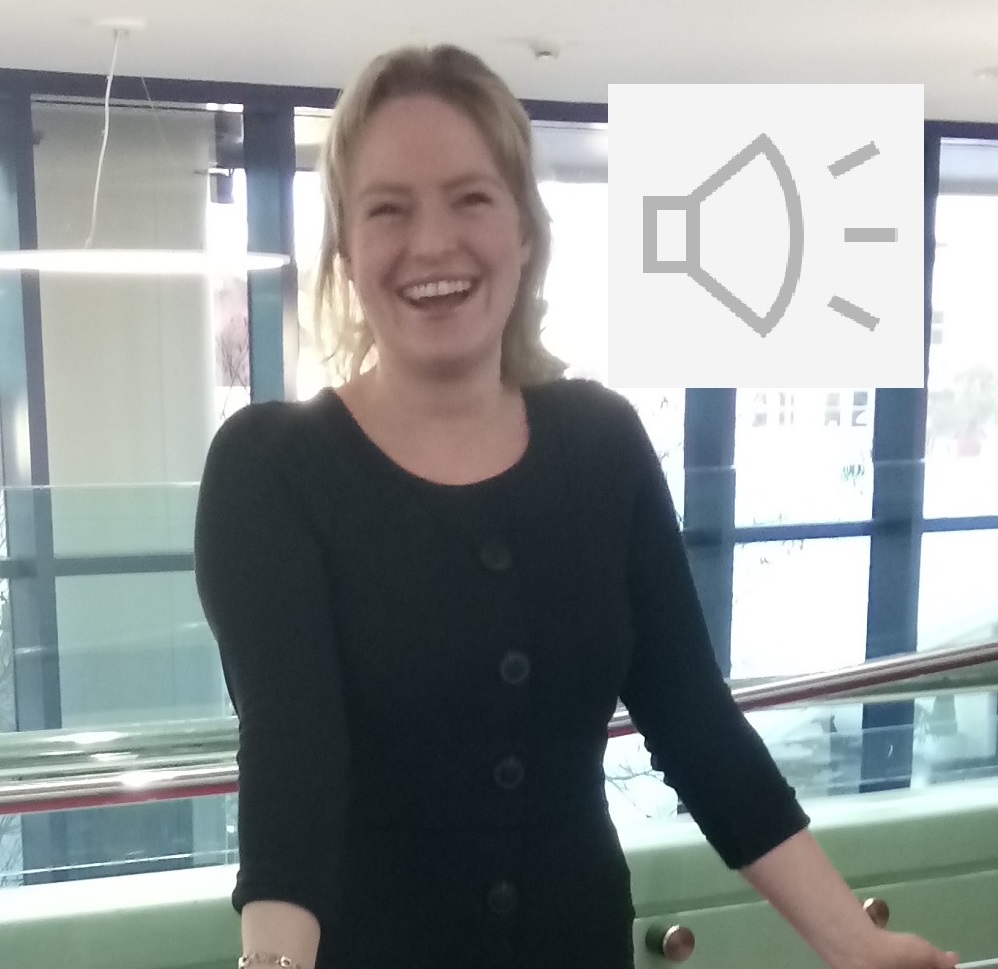
Born in Leicester in 1982, Emily Malen came to the Theatre Royal in 2005 through Loughborough University’s Graduate Gateway Scheme.
She was originally placed within the education team, but gradually worked her way up the organisation to become Front of House Manager.
Of her many achievements Emily has also significantly developed the access work at the venue, ensuring the Theatre Royal is genuinely open to everyone.
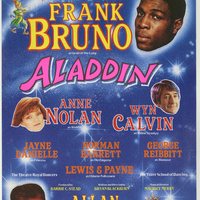
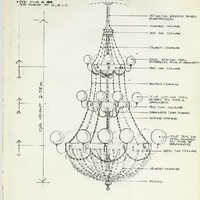
In this interview, Emily remembers visiting the Theatre Royal as a child to see Frank Bruno in Aladdin in 1990, with the venue’s iconic chandelier making a very big impression.
She continues to talk about how Pantomime is still important to her through her work developing relaxed performances, which enable those on the autistic spectrum or who have a learning disability to enjoy the show:
Pantomime is something that’s key because my introduction to this organisation, I would never have known this at the time, but I remember sitting on the Balcony, seeing a massive chandelier, that was just amazing, but also seeing a pantomime. I think my family always bought, so there’s six of us, and we would come on Boxing Day to watch the pantomime. I think our tickets, from now my recollection would be maybe the back of the Balcony. And I remember one year we saw Frank Bruno leaving from the Stage Door and I think that was when he was in Aladdin and I can’t remember everything about the panto, but I remember those little snippets, but they’re quite clear in my memory. So that’s quite interesting that I would never have known that at the time, but I associate that with lovely family memories, but I also now associate that with where I’m working, so it’s quite a nice connection which I never knew was going to ever happen. I would say, I think that was either 80s or early 90s, so I was probably 6 or 7 or 8, maybe. I think there’ll probably be a poster in your files!
I think pantomime is key in terms of that introduction to Theatre because what we do here, we try and expand audiences and what my role in Access is to try and really be as inclusive as possible because it shouldn’t be that just because somebody has an extra support mechanism they might need in place, that the theatre should be closed to them. And it’s that inclusivity in terms of coming as a family unit, so say if Grandma or Grandad’s living with dementia and there may be a young babe in arms, they can all come together to something that’s called a “relaxed performance”. And that’s something that we’ve done, I would say recently in my role here, but that was probably, I think 2014, or 2013 actually was Peter Pan. I think that had David Hasselhoff in it and prior to that we had about 12 months of research into relaxed performances and myself and some my colleagues in Creative Learning and another lady in the Front of House team, we went to Southampton and watched their pantomime a year earlier to see how they did relaxed performances and that helped us to develop it here and then it’s been year on year we’ve had relaxed performances as part of our programme ever since.
I’d say, obviously having the relaxed performances, that was amazing. That was experiencing, obviously I’ve been here a while, but that was the first time I thought I actually witnessed every Department coming together, getting all very linked-in and actually volunteering their time to work the show and seeing the delight on people’s faces. Everyone was very invested in that and by ordinary means we’re always daily working towards the same goal, but that was a new project and it was all quite exciting and even the Managing Director at the time came down and was welling up. It was all, kind of, quite emotional to see this new development, the hard work that everyone had put in to actually allow a whole new audience who may have never visited the theatre and you have feedback where people go “This individual smiled for the first time in years” and you have helped facilitate that and that’s quite an amazing and powerful thing.
She was originally placed within the education team, but gradually worked her way up the organisation to become Front of House Manager.
Of her many achievements Emily has also significantly developed the access work at the venue, ensuring the Theatre Royal is genuinely open to everyone.
In this interview, Emily remembers visiting the Theatre Royal as a child to see Frank Bruno in Aladdin in 1990, with the venue’s iconic chandelier making a very big impression.
She continues to talk about how Pantomime is still important to her through her work developing relaxed performances, which enable those on the autistic spectrum or who have a learning disability to enjoy the show:
Pantomime is something that’s key because my introduction to this organisation, I would never have known this at the time, but I remember sitting on the Balcony, seeing a massive chandelier, that was just amazing, but also seeing a pantomime. I think my family always bought, so there’s six of us, and we would come on Boxing Day to watch the pantomime. I think our tickets, from now my recollection would be maybe the back of the Balcony. And I remember one year we saw Frank Bruno leaving from the Stage Door and I think that was when he was in Aladdin and I can’t remember everything about the panto, but I remember those little snippets, but they’re quite clear in my memory. So that’s quite interesting that I would never have known that at the time, but I associate that with lovely family memories, but I also now associate that with where I’m working, so it’s quite a nice connection which I never knew was going to ever happen. I would say, I think that was either 80s or early 90s, so I was probably 6 or 7 or 8, maybe. I think there’ll probably be a poster in your files!
I think pantomime is key in terms of that introduction to Theatre because what we do here, we try and expand audiences and what my role in Access is to try and really be as inclusive as possible because it shouldn’t be that just because somebody has an extra support mechanism they might need in place, that the theatre should be closed to them. And it’s that inclusivity in terms of coming as a family unit, so say if Grandma or Grandad’s living with dementia and there may be a young babe in arms, they can all come together to something that’s called a “relaxed performance”. And that’s something that we’ve done, I would say recently in my role here, but that was probably, I think 2014, or 2013 actually was Peter Pan. I think that had David Hasselhoff in it and prior to that we had about 12 months of research into relaxed performances and myself and some my colleagues in Creative Learning and another lady in the Front of House team, we went to Southampton and watched their pantomime a year earlier to see how they did relaxed performances and that helped us to develop it here and then it’s been year on year we’ve had relaxed performances as part of our programme ever since.
I’d say, obviously having the relaxed performances, that was amazing. That was experiencing, obviously I’ve been here a while, but that was the first time I thought I actually witnessed every Department coming together, getting all very linked-in and actually volunteering their time to work the show and seeing the delight on people’s faces. Everyone was very invested in that and by ordinary means we’re always daily working towards the same goal, but that was a new project and it was all quite exciting and even the Managing Director at the time came down and was welling up. It was all, kind of, quite emotional to see this new development, the hard work that everyone had put in to actually allow a whole new audience who may have never visited the theatre and you have feedback where people go “This individual smiled for the first time in years” and you have helped facilitate that and that’s quite an amazing and powerful thing.
Type
Oral interview
Location of item
Theatre Royal & Royal Concert Hall Nottingham
Rights
Theatre Royal & Royal Concert Hall Nottingham
Contributor
Interviewers: Liz MacKenzie & Julia Holmes
Transcriber: David Chilton
Transcriber: David Chilton