Emily Malen Interview: The Challenges of Front of House, featuring Rik Mayall
Title
Emily Malen Interview: The Challenges of Front of House, featuring Rik Mayall
Date
17 January 2019
Description
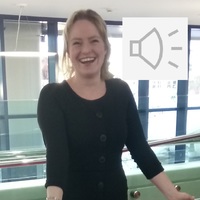
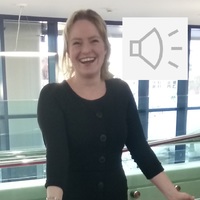
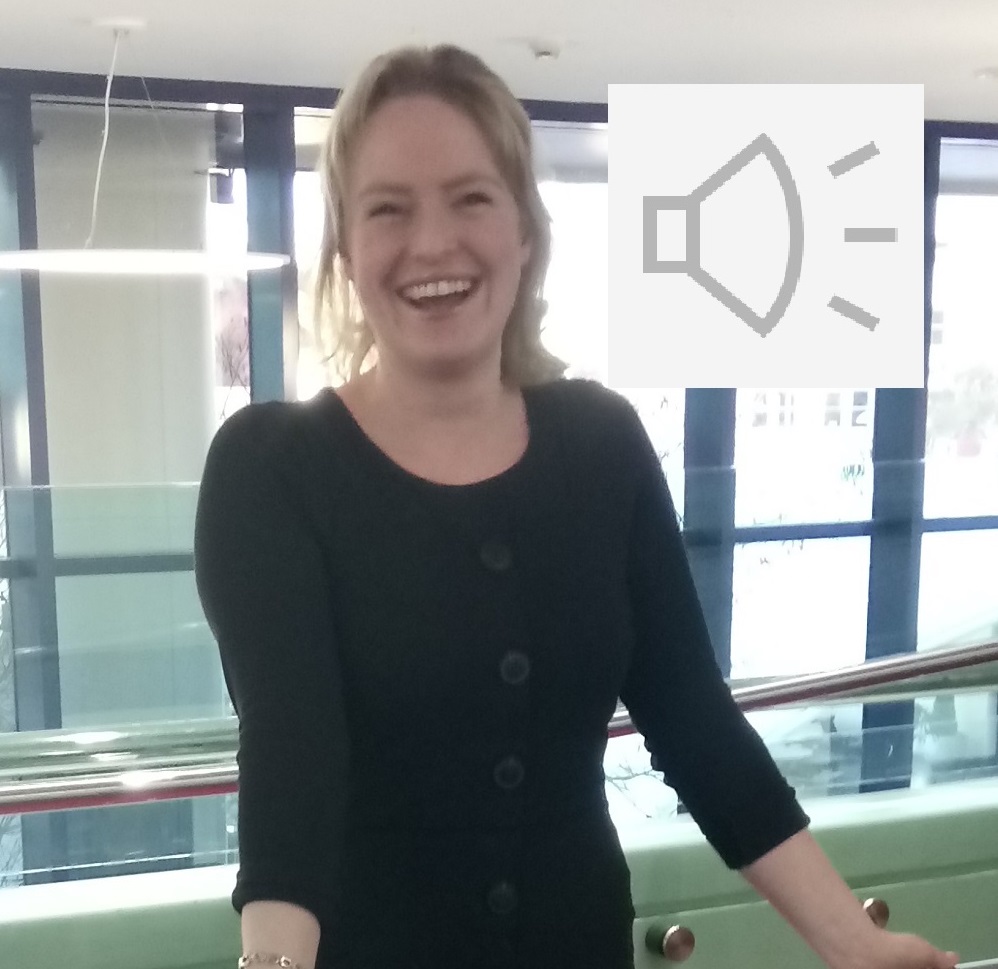
Oral history interview with Emily Malen, Front of House Manager and Access Development for the Theatre Royal since 2005.
What's the story?
Born in Leicester in 1982, Emily Malen came to the Theatre Royal in 2005 through Loughborough University’s Graduate Gateway Scheme.
She was originally placed within the education team, but gradually worked her way up the organisation to become Front of House Manager.
Of her many achievements Emily has also significantly developed the access work at the venue, ensuring the Theatre Royal is genuinely open to everyone.
In this interview, Emily remembers having to do a tannoy announcement just prior to a matinee performance of The New Statesmen informing customers of a late decision that the star Rik Mayall would not be performing in the show.
This excellent example seems to sum up the challenges of being a Front of House Manager and the importance of communication with customers.
Challenges – again on any given night it’s quite challenging if you have had an issue Front of House and you know you’re going to get lots of customers at the interval come to you. It’s that kind of knowing what’s to come. I remember having to do a tannoy announcement when Rik Mayall, who was in the New Statesman. It then became apparent he wasn’t going to be in the matinee and I think that matinee may have had to have obviously had an understudy present, but I also think on some occasions they got cancelled. It was knowing you were making that call, that people did not know that information, but the minute you made that tannoy and your voice obviously boomed over the foyer areas (this was before we had electronic screens on the walls) you knew what was to come because people would be going “I want my refund, what do I do now?” There’s going to be a massive queue at the box office. The stewards … It’s also that thing of at that moment in time I don’t think we had radios, so it’s “How do I communicate to the stewards on every door what we’re going to do and that’s all to do with training in terms of knowing what to expect should this happen. But it is that instant. If you know you’re going to make about two thousand people quite thoughtful in a very short space of time and you’re going to have to be the one who gives clear direction on what happens with that and that’s quite an interesting ability to have but with that comes: those experiences become etched in your memory.
But these things happen and that’s why we’re here. We’re here to make customers have the best time they can, but also if you’ve got to look after them and be the bearer of bad news, you’ve got to be the one that on any night, once the building is … again it’s a strange place because you will have certain people in the building during a daytime, other people in the building at night, some people on split shifts, some people working extremely early hours in the morning, because they’re either building the set or taking it down. But on an evening time, I will probably have left the building because of my role now, my line manager will, the Managing Director will have gone home and the Front of House Manager is kind of the organisational rep for every customer that’s in the building. They pretty much run … they also can consult via telephone or there’s always an emergency procedure in place, but literally they’re there facing it.
And we’re so proud of our team because literally we could go home on an evening time, you come in the next day and with both venues, if all’s gone well, you’ve had about four thousand people enjoy themselves. But if something’s gone wrong, they’ve dealt with four thousand people maybe needing some information very quickly. And prior to a few years ago, social media wasn’t a thing we had to think about, whereas now it’s a key communication method and it’s that instant nature of customer expectation of “You give me that information straight away”, whereas even when I was making that New Statesman announcement, there wasn’t any social media we were doing then at that time. So it’s interesting how communication has just increased tenfold. But with that you have to keep up as an organisation to meet customer expectations. So, yes, that’s interesting to realise what you end up living through.
She was originally placed within the education team, but gradually worked her way up the organisation to become Front of House Manager.
Of her many achievements Emily has also significantly developed the access work at the venue, ensuring the Theatre Royal is genuinely open to everyone.
In this interview, Emily remembers having to do a tannoy announcement just prior to a matinee performance of The New Statesmen informing customers of a late decision that the star Rik Mayall would not be performing in the show.
This excellent example seems to sum up the challenges of being a Front of House Manager and the importance of communication with customers.
Challenges – again on any given night it’s quite challenging if you have had an issue Front of House and you know you’re going to get lots of customers at the interval come to you. It’s that kind of knowing what’s to come. I remember having to do a tannoy announcement when Rik Mayall, who was in the New Statesman. It then became apparent he wasn’t going to be in the matinee and I think that matinee may have had to have obviously had an understudy present, but I also think on some occasions they got cancelled. It was knowing you were making that call, that people did not know that information, but the minute you made that tannoy and your voice obviously boomed over the foyer areas (this was before we had electronic screens on the walls) you knew what was to come because people would be going “I want my refund, what do I do now?” There’s going to be a massive queue at the box office. The stewards … It’s also that thing of at that moment in time I don’t think we had radios, so it’s “How do I communicate to the stewards on every door what we’re going to do and that’s all to do with training in terms of knowing what to expect should this happen. But it is that instant. If you know you’re going to make about two thousand people quite thoughtful in a very short space of time and you’re going to have to be the one who gives clear direction on what happens with that and that’s quite an interesting ability to have but with that comes: those experiences become etched in your memory.
But these things happen and that’s why we’re here. We’re here to make customers have the best time they can, but also if you’ve got to look after them and be the bearer of bad news, you’ve got to be the one that on any night, once the building is … again it’s a strange place because you will have certain people in the building during a daytime, other people in the building at night, some people on split shifts, some people working extremely early hours in the morning, because they’re either building the set or taking it down. But on an evening time, I will probably have left the building because of my role now, my line manager will, the Managing Director will have gone home and the Front of House Manager is kind of the organisational rep for every customer that’s in the building. They pretty much run … they also can consult via telephone or there’s always an emergency procedure in place, but literally they’re there facing it.
And we’re so proud of our team because literally we could go home on an evening time, you come in the next day and with both venues, if all’s gone well, you’ve had about four thousand people enjoy themselves. But if something’s gone wrong, they’ve dealt with four thousand people maybe needing some information very quickly. And prior to a few years ago, social media wasn’t a thing we had to think about, whereas now it’s a key communication method and it’s that instant nature of customer expectation of “You give me that information straight away”, whereas even when I was making that New Statesman announcement, there wasn’t any social media we were doing then at that time. So it’s interesting how communication has just increased tenfold. But with that you have to keep up as an organisation to meet customer expectations. So, yes, that’s interesting to realise what you end up living through.
Type
Oral interview
Location of item
Theatre Royal & Royal Concert Hall Nottingham
Rights
Theatre Royal & Royal Concert Hall Nottingham
Contributor
Interviewers: Liz MacKenzie & Julia Holmes
Transcriber: David Chilton
Transcriber: David Chilton